
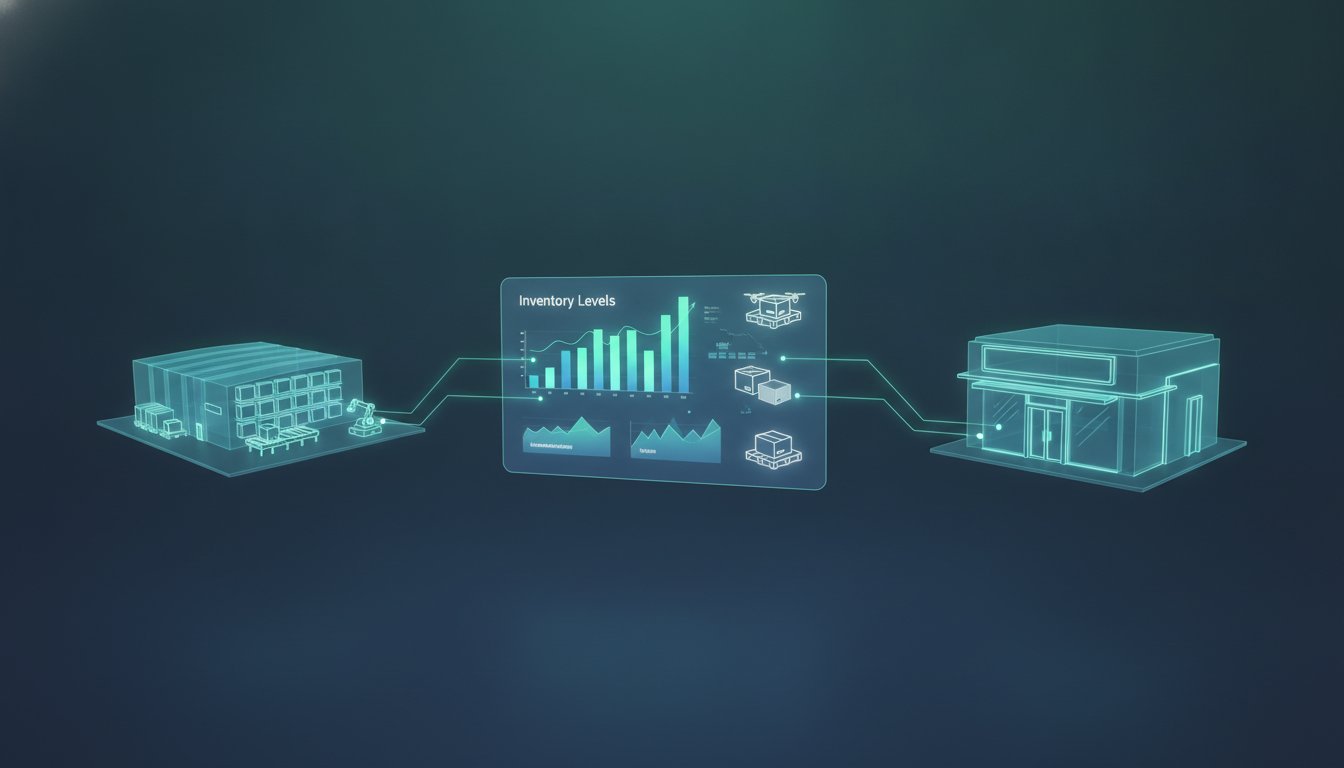
Your software provider shouldn't punish you for succeeding. Most legacy systems treat every new warehouse or storefront like a fresh opportunity to hike your bill. They call it scaling. We call it a growth tax. If you're managing stock across a growing network, multi-location inventory tracking should be a basic utility, not a luxury feature hidden behind a paywall. You shouldn't have to pay extra just to see what you already own.
We know the frustration. You've likely spent your weekends buried in spreadsheets trying to reconcile stock levels between disconnected silos. It's a slow, manual process that leaves you vulnerable to overselling and messy financial data. You need real-time visibility across every site without the enterprise software bloat or the manual chaos. This guide provides a no-nonsense roadmap to mastering your inventory flow. We'll show you how to automate financial consolidation and build a scalable system that respects your bottom line. It's time to stop paying for the privilege of seeing your own data and start running a leaner, smarter operation.
Key Takeaways
- Stop the data decay. Learn why manual entry is where integrity dies and how to establish a single source of truth for every SKU.
- Kill the lag. Master multi-location inventory tracking to get real-time visibility that makes "daily syncs" look like ancient history.
- Solve the Ghost Stock crisis. Align your physical shelves with your financial ledger to prevent overselling and regional valuation drift.
- Scale without the tax. Discover how to integrate inventory with multi-entity accounting to grow your footprint without paying per-location fees.
What is Multi-Location Inventory Tracking (and Why Spreadsheets Fail)?
Multi-location inventory tracking is the real-time synchronization of stock levels, valuations, and movements across every physical site you operate. It isn't just a logistics preference. It's a fundamental requirement for any brand that plans to survive the leap from a single warehouse to a multi-site network. If you don't know exactly what you have and where it sits, you don't actually own your supply chain; it owns you.
The "Spreadsheet Era" is officially over. Manual entry is where data integrity goes to die. When your stock levels rely on a human remembering to update a cell, you aren't running a business; you're running a gamble. These manual logs inevitably create "ghost stock," items that exist in your ledger but aren't on the shelf. This invisibility has a high price. If you can't see it, you can't sell it. You end up trapped in a reactive cycle of counting and apologizing rather than proactive management. Moving to a professional system means you stop chasing errors and start managing assets.
The Logistics vs. Accounting Gap
Most operators treat the warehouse and the ledger as two different countries. Logistics teams obsess over shipping speeds and bin locations. Accounting teams focus on COGS and asset valuations. When these departments use disconnected tools, you spend weeks on manual reconciliation at the end of every quarter. Modern inventory management software should bridge this divide, yet many tools focus only on the warehouse floor. Multi-location inventory is a financial truth-source that turns warehouse activity into accounting reality without the manual middleman.
The Scalability Wall
You can't just "add another tab" to your spreadsheet and expect to scale. The moment you move past two locations, manual updates become physically impossible. This is where most brands hit the scalability wall. Legacy software providers know this. They wait for you to grow and then slap you with a "Growth Tax" by charging per-location fees. It's a scam designed to punish your success. Opening a second warehouse shouldn't double your software bill. Relying on multi-location inventory tracking that scales with your volume, not your location count, is the only way to maintain healthy margins. Effective inventory management should support your expansion, not act as a toll booth for every new zip code you enter.
The Mechanics of Multi-Site Visibility: Tracking Beyond the Warehouse
Visibility is not just about knowing where a box sits on a shelf. It is about data velocity. In a modern economy, a "daily sync" is actually 24 hours too late. If you sell your last unit in a Los Angeles showroom, your fulfillment center in Chicago needs to know before the next customer clicks "buy." Modern multi-location inventory tracking requires a single source of truth that operates in real time. Anything less is just a digital version of a paper logbook. Recent research into advanced technologies in inventory control confirms that cloud-based synchronization is the only way to eliminate the information lag that kills margins.
Centralized data ensures that every SKU has one identity, regardless of its zip code. When you move stock from Location A to Location B, you aren't just moving physical items; you are moving value. You need a system that tracks this movement as a financial event, not just a change in a bin location. By using automated reorder points, you can let logic handle your replenishment. Logic doesn't guess. It looks at lead times, safety stock, and historical velocity to trigger orders exactly when they are needed. This removes the emotional guesswork that leads to overstocking or stockouts.
Serialization and Batch Tracking
Precision matters. For high-value goods or regulated products, you need to track individual units through serialization. This ensures a specific serial number follows the item from the moment it is received until it reaches the customer. It is essential for managing warranties and returns without the headache of manual verification. For bulk items, batch tracking allows you to monitor groups of products with the same expiration or manufacturing date. Both methods ensure that your inventory management remains granular enough to be useful but fast enough to stay out of your way.
Inter-Company Transfers and the Ledger
Scaling brands often operate across multiple LLCs. Moving stock between these entities isn't a simple transfer; it is a transaction. Location A is essentially "selling" to Location B. If your software doesn't understand this, your year-end tax preparation will be a nightmare of manual adjustments. You need a system that automates the accounting entries for these inter-company transactions. This ensures that your consolidated reporting reflects the true financial health of the entire organization. When the ledger and the warehouse speak the same language, you gain a level of operational clarity that legacy systems simply cannot provide.
Common Pitfalls: Why Your Inventory Data and Financials Don’t Match
Most inventory managers and CPAs live in two different worlds. One cares about boxes. The other cares about balances. When these worlds don't align, you end up with "Ghost Stock"—items that exist on your digital ledger but aren't actually on the shelf. This isn't just an operational hiccup. It's a financial liability. Selling stock you don't have leads to customer churn, while holding stock you haven't recorded leads to tax inaccuracies. Achieving effective inventory management requires more than just counting units; it requires a system that reconciles your physical reality with your financial records in real time.
Valuation drift is another silent profit killer. When your stock is spread across regions, the cost of that stock isn't uniform. Freight, regional taxes, and storage fees fluctuate. If you aren't applying specific FIFO or LIFO logic across every site, your COGS (Cost of Goods Sold) is a guess, not a calculation. This creates a manual consolidation trap. Many founders spend 40 hours a month wrestling with VLOOKUPs just to get a single clear view of their assets. That is a week of strategic growth traded for clerical cleanup. You shouldn't have to choose between accurate data and a life outside of Excel.
The Human Error Factor
Manual data entry is where your margins go to die. Industry standards show that manual entry carries an error rate between 1% and 4%. While that sounds small, it compounds across multiple locations. If three different warehouse leads use three different naming conventions, your multi-location inventory tracking becomes a pile of useless data. You need standardized SOPs and a system that enforces data uniformity. The "I’ll update it later" syndrome is a virus. It destroys real-time visibility and forces you back into a reactive, firefighting mode.
Inventory Shrinkage and Financial Leakage
Poor tracking masks more than just mistakes; it masks theft and damage. Without a clear paper trail across every site, "mysterious" losses become a standard cost of doing business. They shouldn't be. You need a digital ledger that matches your physical audits. Regular, simultaneous audits across all locations validate your data and stop financial leakage before it drains your cash flow. If you can't trace a missing unit to a specific transaction or transfer, you have a hole in your bucket. Using consolidated reporting helps you spot these discrepancies across your entire organization before they become year-end nightmares.

How to Implement a Multi-Location System That Actually Scales
Implementing a professional system for multi-location inventory tracking doesn't require months of expensive consultants or enterprise software bloat. It requires a logical sequence of operations. Most brands fail because they try to automate a mess. If your data is dirty, software just helps you make mistakes faster. You need to establish a foundation of truth before you flip the switch on a new system. Follow these five steps to move from spreadsheet chaos to operational clarity.
- Step 1: Standardize your SKU architecture across the entire organization. Every location must speak the same language.
- Step 2: Audit every location simultaneously to establish a clean baseline. You can't manage what you haven't verified.
- Step 3: Choose software that integrates inventory with your primary ledger. Disconnected tools create the "Logistics vs. Accounting Gap" we discussed earlier.
- Step 4: Train your team on "System-First" workflows. If it didn't happen in the software, it didn't happen. No exceptions.
- Step 5: Review consolidated reports weekly to catch discrepancies early. Drift happens; catching it early prevents year-end disasters.
Defining Your SKU Architecture
One SKU, multiple locations. Period. You should never create location-specific SKUs like "Blue-Widget-Chicago." This creates unnecessary data bloat and makes inter-site transfers impossible to track accurately. Your naming conventions should be logical enough for humans to read but structured enough for algorithms to sort. Use barcodes to eliminate front-line entry errors. A scanner doesn't have a "bad day" or forget to update a cell. It simply records the truth. This level of inventory management ensures that your data remains clean as you scale from two sites to twenty.
The Tech Stack: Integration is Non-Negotiable
Stop "bolting on" inventory apps to basic accounting tools. This creates a fragmented system that fails the moment your volume increases. You need a tech stack where the inventory lives where your money lives. This makes consolidated reporting a native feature rather than a manual project. When evaluating software, watch out for the "Growth Tax." Many legacy providers charge per-entity or per-location fees. This is a scam that punishes your expansion. Look for flat-rate logic that allows you to open new warehouses without doubling your overhead. If you're tired of being taxed for your own success, it's time to view our transparent pricing plans and see how we support scaling brands.
EmLedger: Inventory Management Integrated with Multi-Entity Accounting
Inventory isn't just a list of boxes. It is a list of assets. Most software companies treat your stock like a logistics problem and your ledger like an afterthought. We built EmLedger because we believe your inventory should live where your money lives. This is the only way to achieve true financial visibility. Our platform was designed by CPAs who understand that a warehouse update isn't finished until the balance sheet reflects it. We've stripped away the marketing fluff to give you a tool that prioritizes logic and accuracy over colorful dashboards.
Real-time visibility means seeing your total position across 10 LLCs in a single click. You don't have time to log in and out of different accounts to see your global stock levels. With EmLedger, multi-location inventory tracking is a native part of your financial ecosystem. You get a consolidated view of your entire operation without the manual export-import dance. We provide the clarity you need to make fast, data-driven decisions. If you're tired of systems that can't keep up with your pace, it's time for a professional alternative.
One Ledger, Infinite Locations
EmLedger simplifies the complexity of multi-entity accounting by treating your organization as a single, unified system. We automatically consolidate inventory values across all your subsidiaries. This eliminates the need for manual year-end adjustments and ensures your financial reports are always audit-ready. Our specific Inventory Management toolset allows you to track stock movements, valuations, and inter-company transfers with zero friction. You gain a single source of truth that spans your entire corporate structure.
Disrupting the Pricing Scam
The industry standard is to punish growth. Legacy providers wait for you to open a second warehouse or a third entity and then double your subscription cost. We find this practice offensive. Our Solo, Growth, and Scale plans are built on a different philosophy. We offer flat-rate logic that respects your resources. Multi-location inventory tracking shouldn't come with a "Growth Tax" that eats your margins. You deserve a partner that rewards your expansion instead of billing you for it. Stop paying a fee for every new zip code. Keep the profit your expansion actually earns.
Stop Guessing and Start Scaling
You have the roadmap. You understand why spreadsheets fail and how real-time visibility protects your margins. Mastering multi-location inventory tracking isn't just about moving boxes; it's about protecting your financial truth across every site. You've seen the pitfalls of data silos and the scam of per-location pricing. Now, it's time to choose a system that respects your logic and your resources.
EmLedger is the clean, logical exit from complexity. We built this platform for operators who are tired of hidden costs and disconnected data. As a system built by a CPA for multi-entity operators, we offer consolidated reporting in one click without the burden of per-entity fees. We don't believe in taxing your success. It's time to keep your profits instead of giving them to your software provider. Stop paying the growth tax. Explore EmLedger’s Scale Plan today. Your business is ready to grow. Make sure your system is ready to keep up. You've done the hard work of building a brand. Now, give yourself the tools to actually manage it.
Frequently Asked Questions
What is the difference between multi-location and multi-warehouse tracking?
How do I handle inventory transfers between two different LLCs?
Transfers between LLCs must be treated as inter-company transactions. You aren't just moving a box; you're executing a sale and a purchase between two legal entities. A professional system automates these entries in the ledger. This prevents messy year-end reconciliations and ensures that each LLC’s balance sheet remains audit-ready without the need for manual journal entries or clerical cleanup.
Can I track multi-location inventory in a spreadsheet?
You can track stock in a spreadsheet, but you shouldn't if you value data integrity. Manual entry is a breeding ground for error. Spreadsheets lack real-time synchronization, which inevitably leads to "ghost stock" and overselling. Professional multi-location inventory tracking eliminates the information lag that kills margins. If your business is scaling, relying on a static file is a recipe for operational bankruptcy.
What is the best way to handle inventory valuation across different sites?
The best way to handle valuation is through a centralized system that applies FIFO or LIFO logic across all regions. Costs like freight and regional taxes vary by location. Your software should track these specific landed costs. This ensures your Cost of Goods Sold (COGS) is a precise calculation rather than a regional guess. Accuracy here is the difference between actual profit and a costly clerical error.
Do I need a separate software for inventory and accounting?
No. Using separate software for inventory and accounting is a strategic mistake. It creates a data silo where the warehouse manager and the CPA are looking at two different worlds. Integrated systems ensure that every physical movement triggers a financial event in the ledger. This approach eliminates the 40 hours a month founders often spend on manual VLOOKUPs and reconciliation projects.
How does multi-location tracking help with tax reporting?
Accurate tracking provides a clear audit trail for ending inventory valuations, which is critical for tax compliance. It prevents you from overpaying on assets that no longer exist or under-reporting stock levels. In a multi-site network, regional tax requirements can get complex. A unified system ensures your consolidated reports are accurate and ready for your tax professional without the usual last-minute panic.
What are the most common mistakes in multi-site inventory management?
The most common mistakes include creating location-specific SKUs and failing to audit all sites simultaneously. Using different names for the same product at different sites creates massive data bloat. Additionally, "I'll update it later" syndrome destroys real-time visibility. Standardizing your SKU architecture and enforcing strict SOPs are the only ways to maintain a clean baseline as you expand your physical footprint.
Is per-location pricing standard in the inventory software industry?
Per-location pricing is common among legacy providers, but it is essentially a growth tax. These companies punish your success by hiking your bill every time you open a new warehouse. It's a pricing scam designed to extract more value from your expansion. Serial entrepreneurs should look for flat-rate pricing models that allow for unlimited locations without the predatory fees found in enterprise bloatware.


